Chengdu Food Walking Tour: The Self-Guided Eating Itinerary (2026)
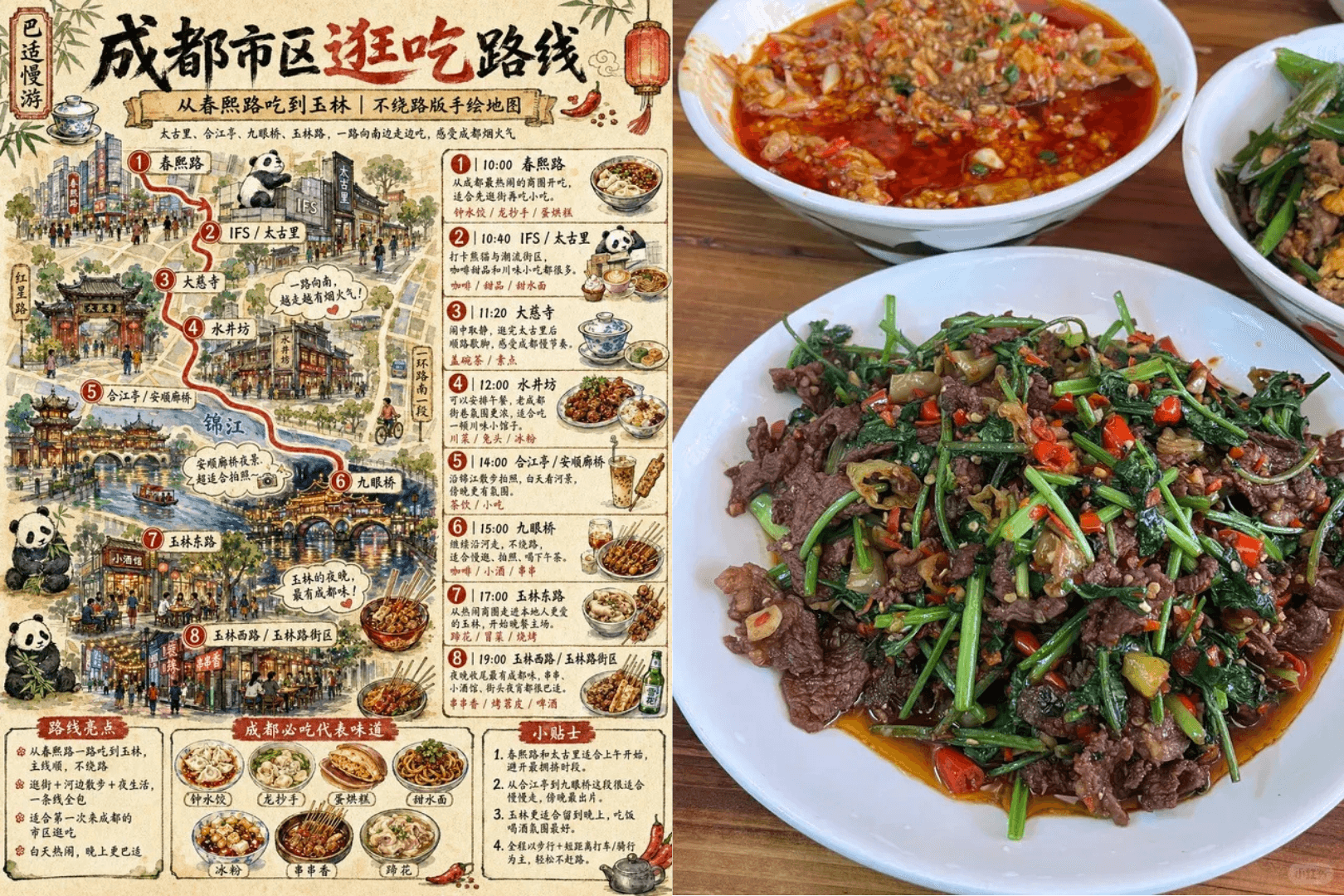
chengdu-food-walking-tour,This self-guided Chengdu food walking tour is built around three neighbourhoods, each with a different personality and a different set of dishes. You can do all three in a full day, or pick one area for a half-day eating session. Either way, come hungry.

Chengdu Food Walking Tour: The Self-Guided Eating Itinerary (2026)
Chengdu holds more UNESCO Creative Cities of Gastronomy designations than almost anywhere on earth — and it earned them. This is a city where people plan their days around meals, where a bowl of noodles costs ¥10 and tastes better than restaurant food in most capitals, and where the question "have you eaten?" replaces "how are you?" as the standard greeting.
This self-guided Chengdu food walking tour is built around three neighbourhoods, each with a different personality and a different set of dishes. You can do all three in a full day, or pick one area for a half-day eating session. Either way, come hungry.
On spice: Sichuan food uses two kinds of heat — chilli (辣, là) and Sichuan peppercorn (麻, má), which creates a numbing, almost electric sensation on the tongue. Start with dishes marked "mild" if you're heat-sensitive, and build up. The numbing fades after 10–15 minutes. It is worth it.
The Dishes You Must Eat (and What They Actually Are)
Before the walking routes, a quick orientation. These are the non-negotiables of any Chengdu food walk — understanding what they are helps you order confidently.
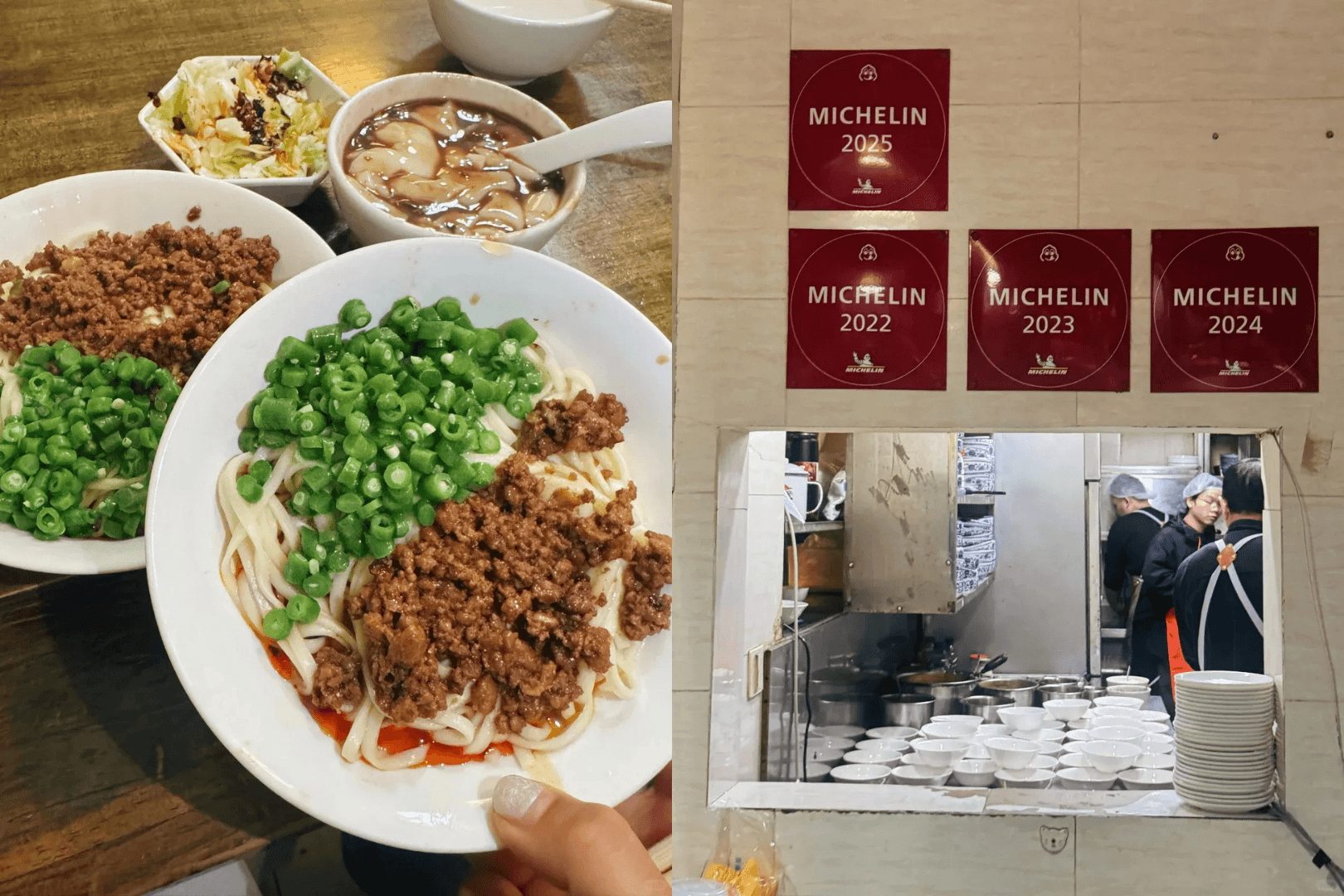
Dan Dan Noodles (担担面, dān dān miàn)
¥8–15 per bowl · available everywhere · eat at any time of day
Thin wheat noodles in a small bowl with chilli oil, ground pork, preserved mustard greens (yacai), crushed peanuts, and Sichuan pepper. The authentic Chengdu version has very little broth — you mix everything together at the table. A bowl takes about five minutes to eat. If your dan dan noodles have a thick peanut butter sauce, you're eating the Americanised version, not the Chengdu original, which is drier, oilier, and sharper.
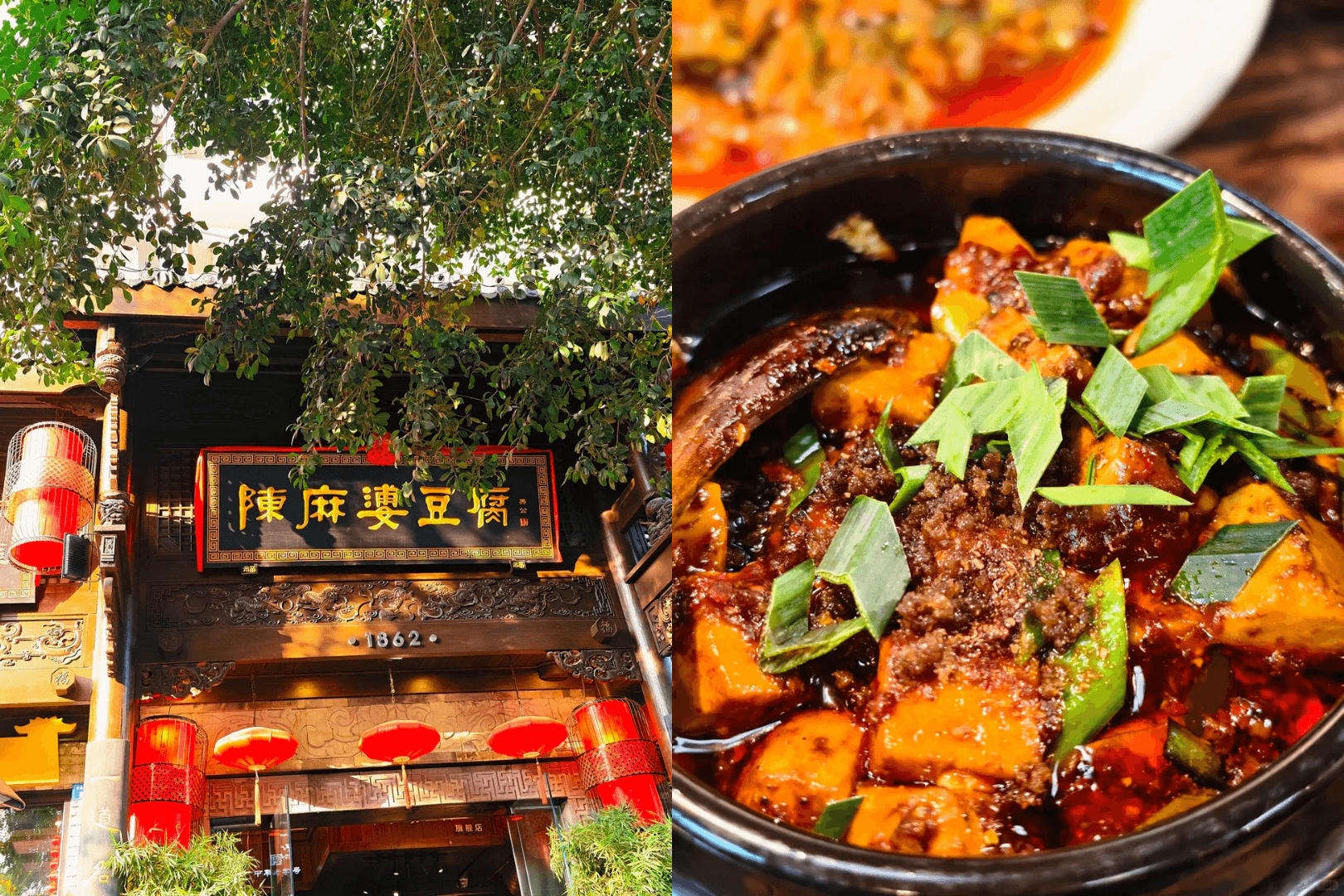
Mapo Tofu (麻婆豆腐, má pó dòufu)
¥10–25 per portion · best at sit-down restaurants · lunch or dinner
Silky tofu in a sauce built on doubanjiang (fermented broad bean paste) and douchi (fermented black beans), with ground beef, chilli oil, and a heavy dusting of ground Sichuan peppercorn. It is oily, deeply savoury, and aggressively numbing. The dish was invented in Chengdu during the Qing Dynasty — the original restaurant, Chen Mapo Tofu on Qinghua Road, has been serving it since 1862.
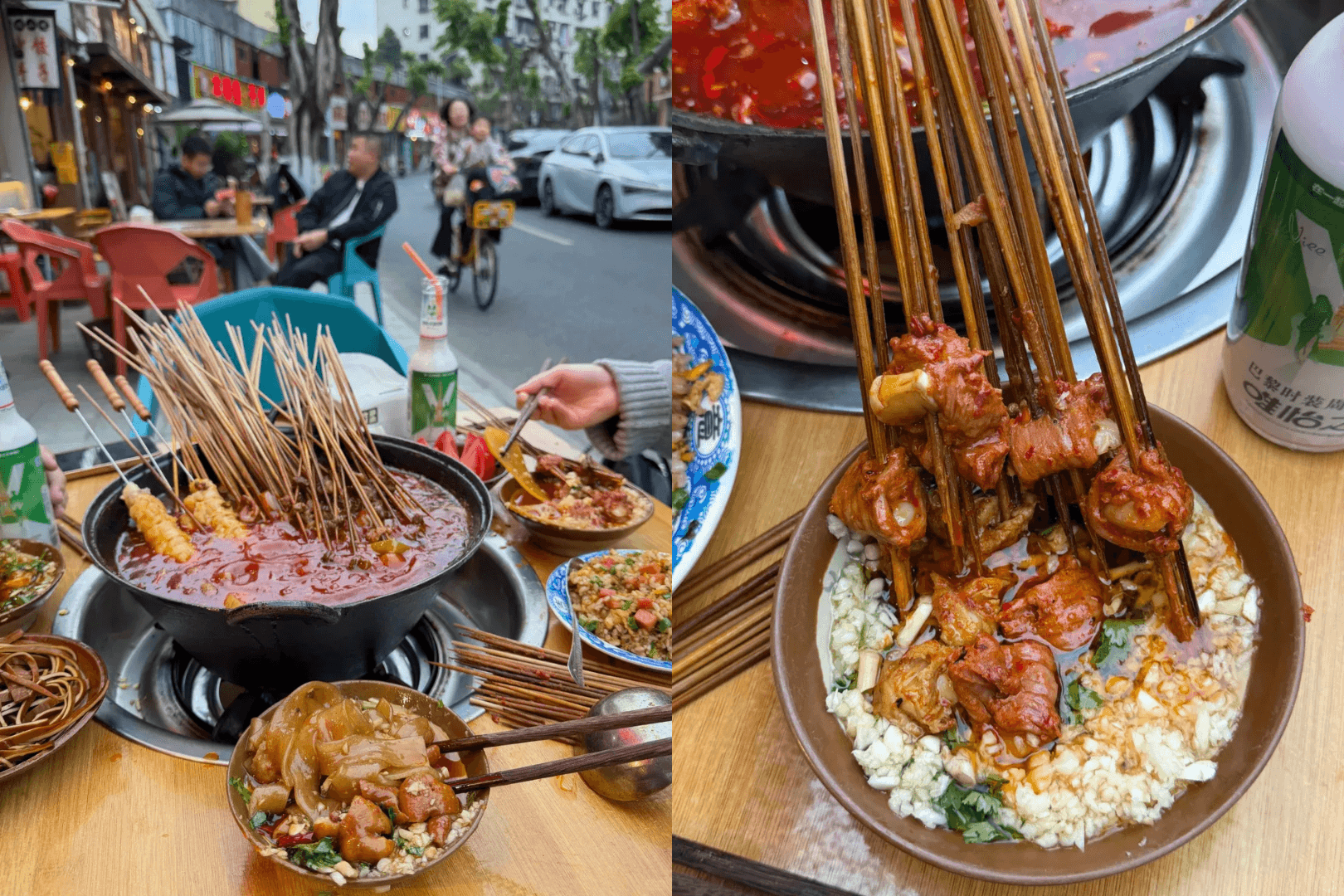
Chuan Chuan Xiang (串串香) — Skewer Hotpot
¥1–3 per skewer · street stalls and casual restaurants · afternoon and evening
Hotpot's casual, street-food cousin. Pick your own skewers — meat, vegetables, tofu, offal — from a basket, then cook them in a communal spicy broth. Payment is counted by the number of sticks. One of the most economical things you can eat in Chengdu, and one of the most satisfying.
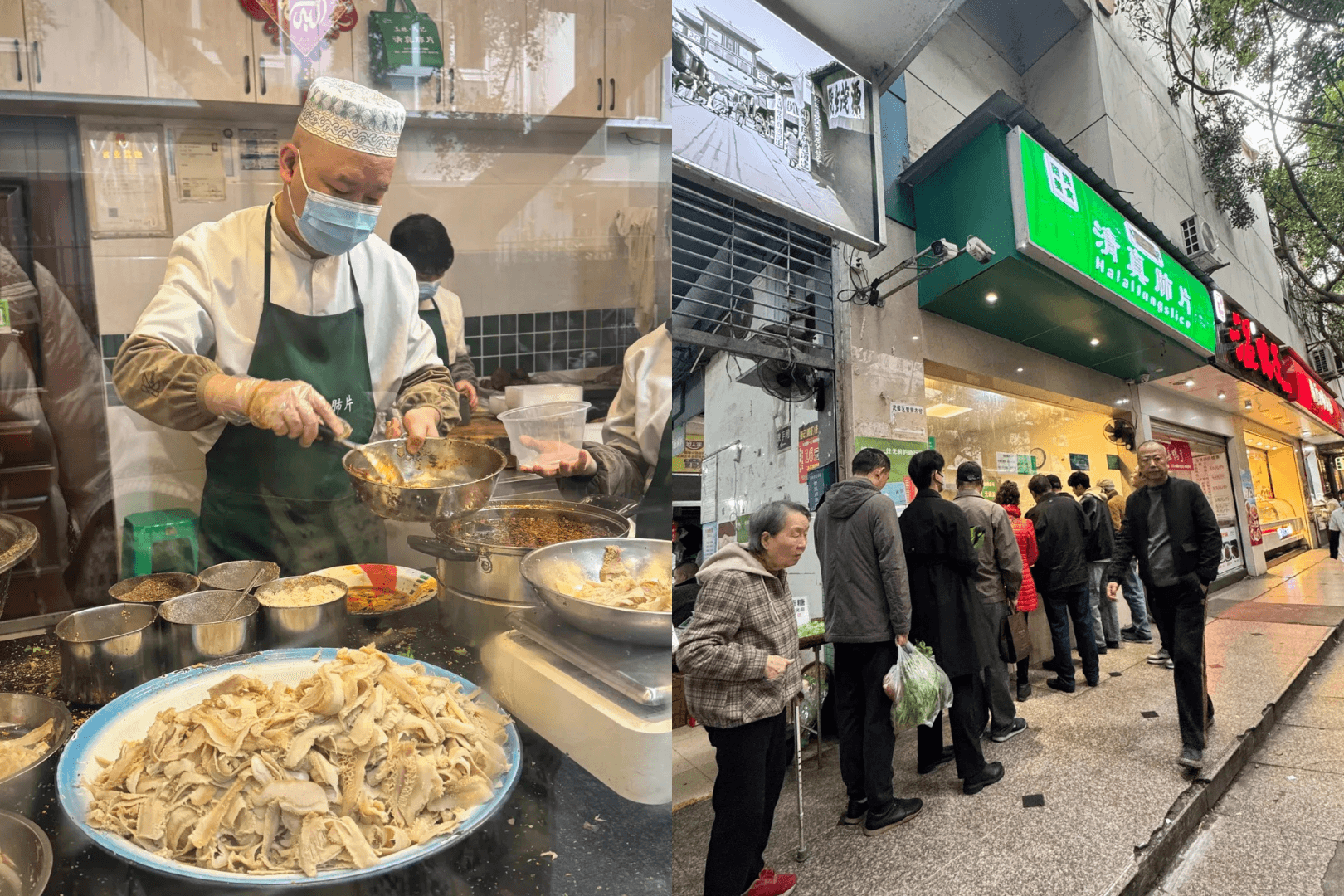
Fuqi Feipian (夫妻肺片)
¥20–35 per portion · cold dish · starter
Thinly sliced beef and tripe dressed in chilli oil, Sichuan pepper, sesame paste, and peanuts. Served cold. The name translates roughly as "husband and wife offal slices" — the dish was reportedly invented by a couple who sold it from a street stall. It looks mild. It is not mild. It is addictive.
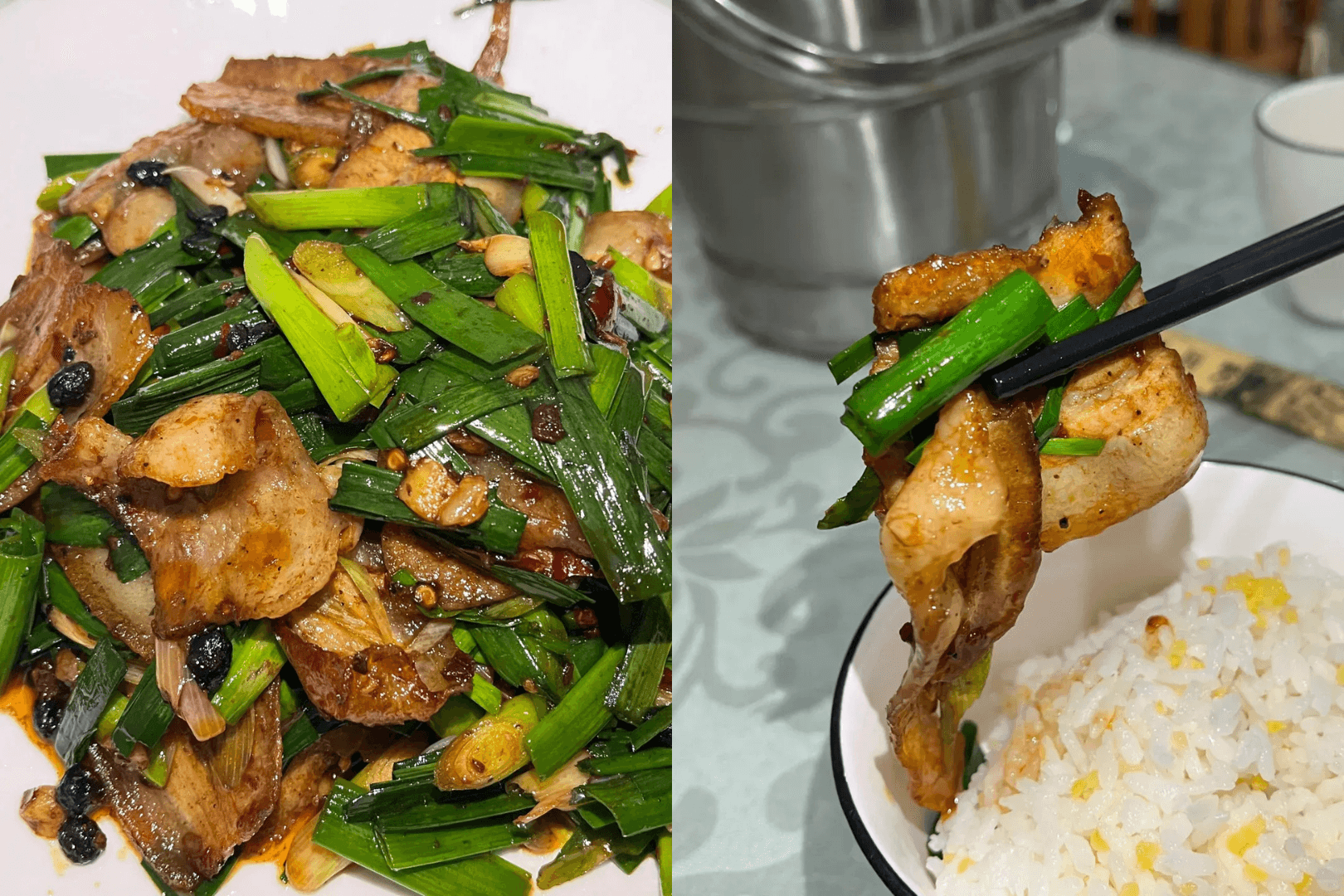
Twice-Cooked Pork (回锅肉, huí guō ròu)
¥25–40 per portion · sit-down restaurants · lunch or dinner
Pork belly boiled, then sliced thin and wok-fried with doubanjiang, garlic leeks (suan miao), and fermented black beans. The authentic Chengdu version uses garlic leeks, not cabbage — if you see cabbage, it's an adaptation. Sometimes called the king of Sichuan dishes by locals.
Sweet Water Noodles (甜水面, tián shuǐ miàn)
¥8–12 · street stalls · morning and afternoon snack
Thick, chewy wheat noodles dressed in a sauce that is simultaneously sweet, spicy, and savoury — the balance is the point. One of Chengdu's most underrated street foods and one of the easiest for newcomers to handle, since the heat is gentler than most dishes here.
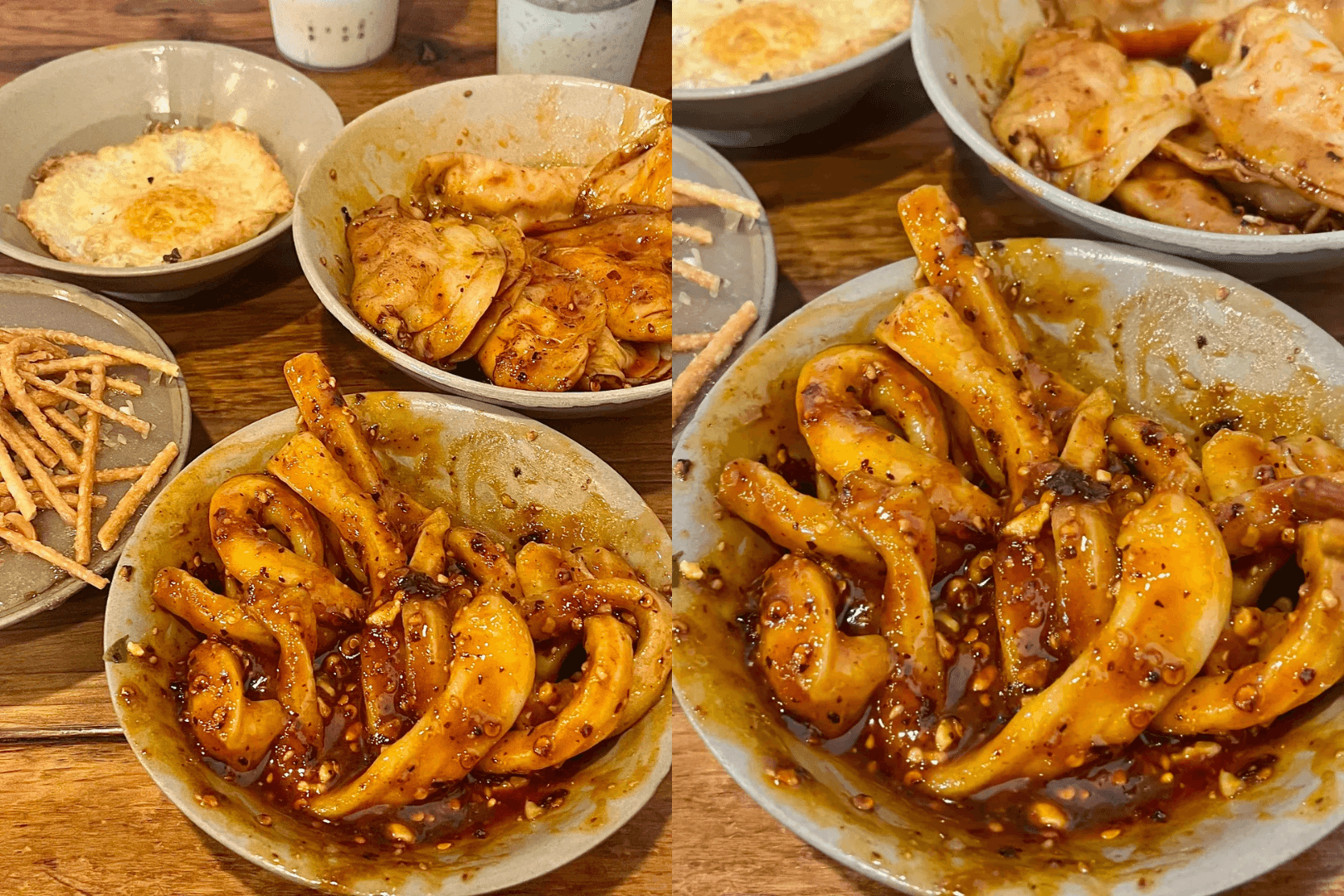
Route 1: Morning — Wenshu Monastery Area (文殊院)
Best for: Breakfast food, traditional snacks, local atmosphere
Start: Wenshu Yuan Metro Station (Line 1)
Duration: 1.5–2 hours
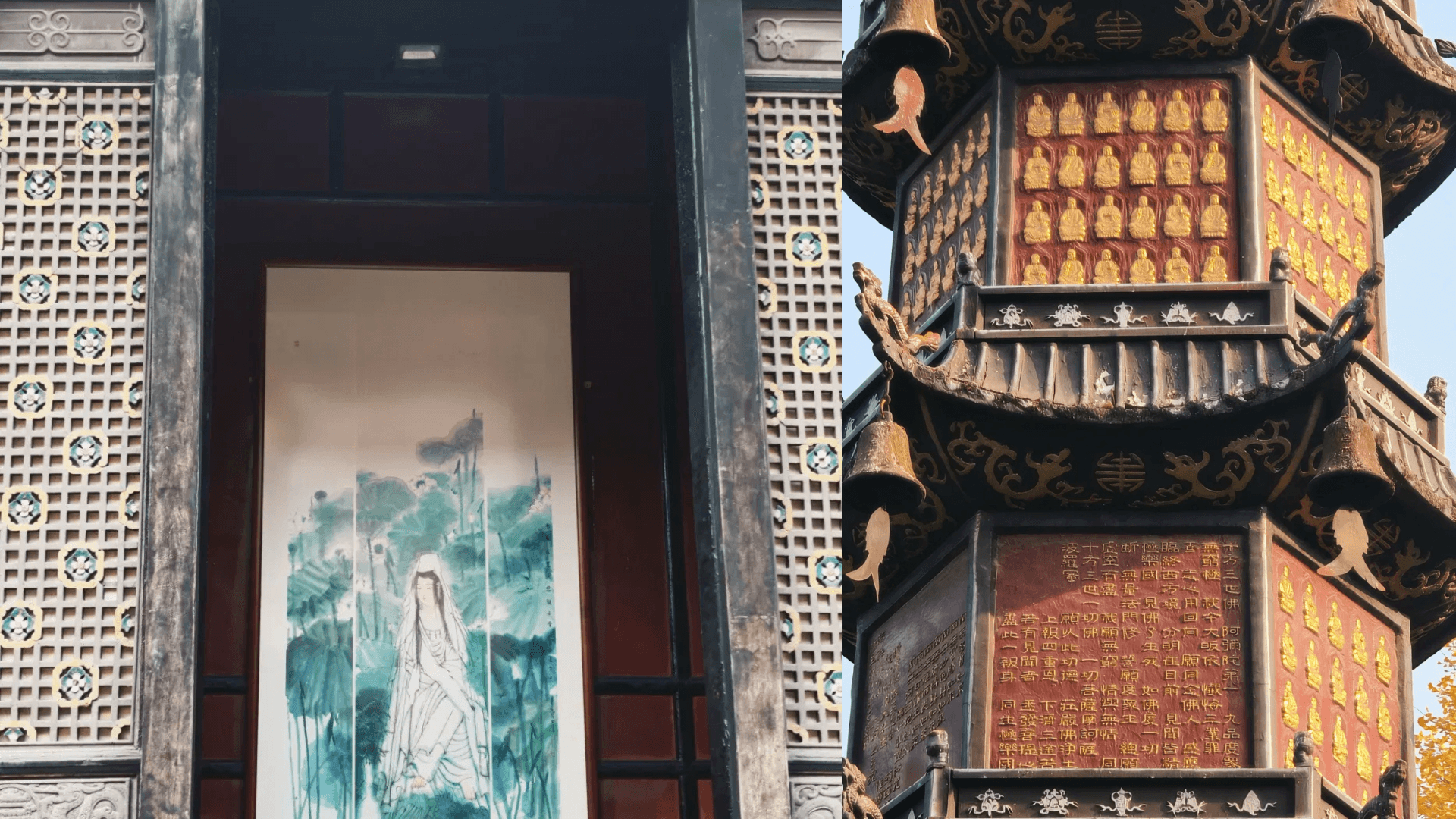
The Wenshu Monastery neighbourhood is where Chengdu eats breakfast. The streets around the monastery — particularly Wenshuyuan Street and the lanes heading north — fill with vendors from around 7am, selling the kinds of food that locals eat before work.
What to Eat Here
Dan dan noodles for breakfast. Yes, noodles for breakfast is correct. Find a small shop with plastic stools and a hand-written menu — these are the ones worth eating at. A bowl of dan dan costs ¥8–12. The best vendors are on the side streets rather than the main Wenshuyuan Street.
Sweet water noodles. The stalls outside the monastery gates often serve both dan dan and sweet water noodles side by side. Order one of each and share if you're eating with someone.
Wenshu Monastery vegetarian restaurant. Inside the monastery compound, the temple's own restaurant serves Buddhist vegetarian cuisine — cold-dressed dishes, steamed buns, congee. Exceptional value at ¥15–30 per person. Worth entering the monastery (free entry) specifically for this.
Sesame paste cold skin noodles (凉皮, liáng pí). A cooling option that works as a counterpoint to the numbing heat of everything else. Wide, slippery noodles in sesame sauce with cucumber shreds.
After eating: Walk through the monastery itself — free entry, genuinely active Buddhist worship, heavy incense, ornate courtyards. Then explore the antique and tea shops on the surrounding streets before moving south toward the next area.
Route 2: Late Morning to Lunch — Kuanzhai Alley Area (宽窄巷子)
Best for: Iconic Chengdu snacks, street food theatre, browsing
Start: Kuanzhai Alley Station (Line 4), Exit B
Duration: 1.5–2.5 hours
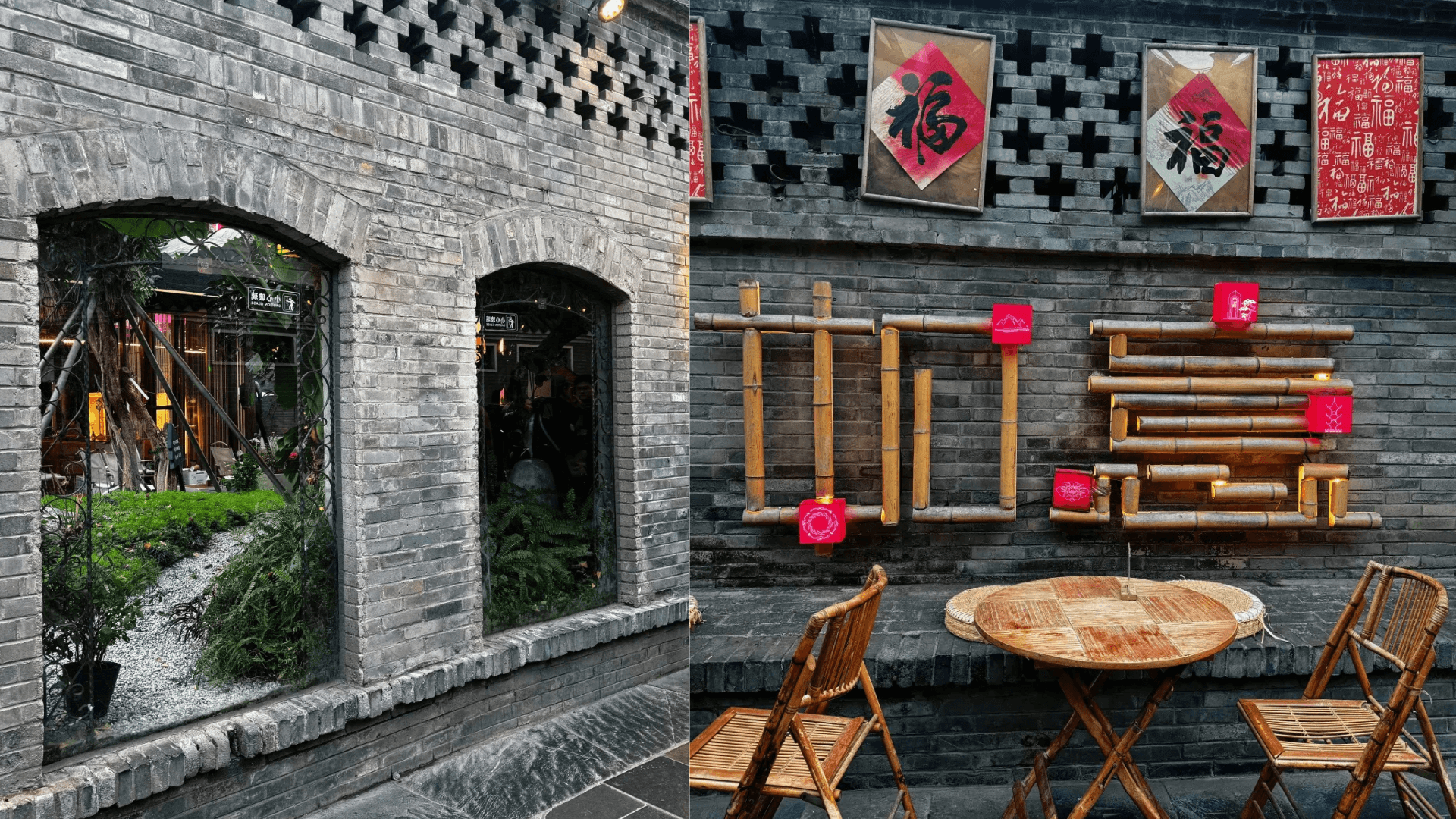
Kuanzhai Alley — the historic "Wide and Narrow Alley" district — is Chengdu's most concentrated food-and-culture zone. The food here is more expensive than elsewhere and more tourist-facing, but the snack culture is genuine and the settings are beautiful.
For a complete walking guide to the area including architecture and what to do beyond eating, see our Kuanzhai Alley walking tour guide.
What to Eat Here
San Da Pao (三大炮) — Three Cannons. Glutinous rice balls thrown by a vendor into a tray of toasted soya flour, landing with a satisfying clang. The spectacle is half the dish. Around ¥15.
Zhong Dumplings (钟水饺). Thin-skinned pork dumplings dressed in dark soy, red chilli oil, and a small amount of sugar. The sweet-heat combination is distinctive and specifically Chengdu.
Rabbit head (兔头, tù tóu). Cold, split in half, dressed in chilli oil and Sichuan peppercorn. The most challenging Chengdu snack for newcomers, and one of the most rewarding. Ask for mild (微辣, wēi là) if uncertain.
Dragon's Beard Candy (龙须糖). Maltose spun into thousands of white strands around crushed peanut and sesame filling. The stretching performance is worth watching even if you don't eat one. ¥15–25.
Fuqi Feipian at a sit-down restaurant. Jing Alley (the third, most commercial lane) has several restaurants serving proper cold dishes alongside the street snacks. Order fuqi feipian as a cold starter.
Route 3: Afternoon and Evening — Yulin Street Area (玉林街道)
Best for: Local eating, no tourists, best value in the city
Start: Nijiaqiao Metro Station (Line 3)
Duration: 2–3 hours
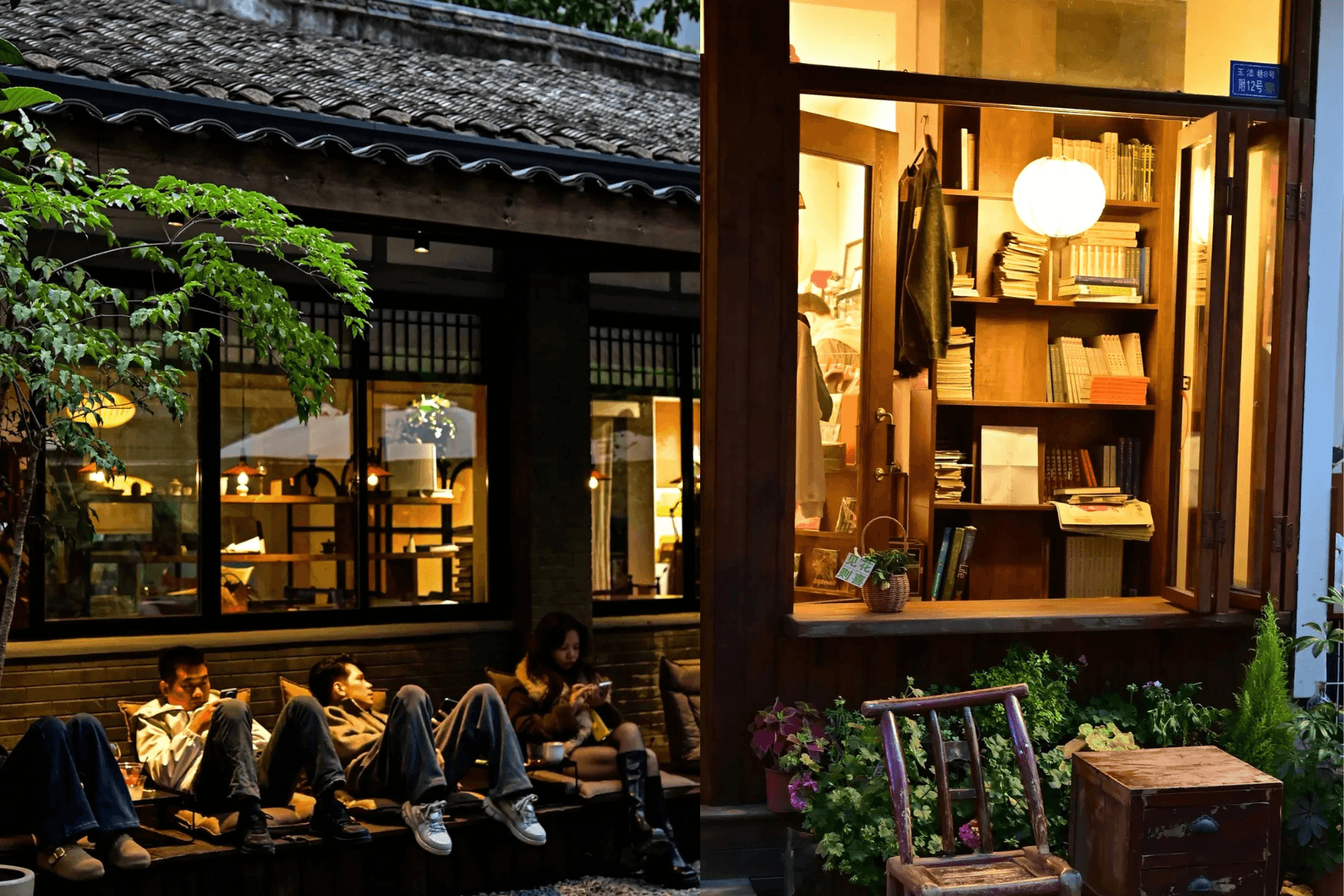
Yulin is the neighbourhood most food-focused visitors to Chengdu never reach — and the one most frequently recommended by people who live here. For a more local, less crowded, and budget-friendly experience, Yulin Street is the area locals point to over the tourist-facing alternatives.
The wet market at Yulin Comprehensive Market is a short walk from Nijiaqiao Station. This is not a tourist attraction — it is where Chengdu residents buy their groceries and breakfast. Vendors sell freshly made corn pancakes, sweet corn juice, and assembled cold dishes from early morning.
What to Eat Here
Chuan chuan xiang skewers. Yulin has some of the best skewer hotpot in Chengdu, at street-stall prices. Look for the spots with the largest queues of local people in the late afternoon — around 5–6pm, when residents stop for dinner after work.
Mapo tofu at a local restaurant. At ¥10–25 per portion, Mapo Tofu is a reasonably priced, filling meal at Yulin's neighbourhood restaurants — substantially cheaper than the tourist-area versions. The quality is often higher too, because the restaurant's customers are locals who know what it should taste like.
Twice-cooked pork. Order it at any of the small family restaurants on the side streets off Yulin Road. Ask for hui guo rou — the pronunciation is roughly "hway gwor ro." Point at the menu if needed.
Evening Sichuan hotpot. If you're doing a full-day food walk, end in Yulin with hotpot at dinner. Huangcheng Laoma Hotpot on Qintai Road nearby is a family favourite — go early around 5pm to avoid queues, and share family-style. The yuanyang (half-spicy, half-clear) broth is the right choice if your group has mixed spice tolerances.
The "fly restaurant" rule: In Chengdu, the best food is often at the scruffiest-looking places. Locals call these cangying guan (苍蝇馆子) — "fly restaurants." Plastic stools, hand-written menus, strip lighting. If there's a queue of local people outside a place that looks like this, go in.
Full-Day Food Walk: The Combined Itinerary
Time | Area | What to eat | Budget |
|---|---|---|---|
7:30–9:00am | Wenshu Monastery | Dan dan noodles, sweet water noodles, temple vegetarian | ¥20–40 |
10:00am–12:00pm | Kuanzhai Alley | San Da Pao, Zhong dumplings, rabbit head, cold dishes | ¥60–100 |
12:00–1:30pm | Chen Mapo Tofu (Qinghua Rd) | Mapo tofu, twice-cooked pork, cold starters | ¥40–70 |
3:00–5:00pm | Yulin wet market | Browse, taste snacks, corn pancakes, assembled cold dishes | ¥15–30 |
6:00–8:00pm | Yulin / Qintai Road | Sichuan hotpot (yuanyang broth), skewer hotpot | ¥60–100 |
Total for the full day: ¥195–340 per person, including everything above.
Practical Notes for Your Food Walk
Payment: Most street vendors and small restaurants accept only WeChat Pay or Alipay. Link an international credit card to either app before you arrive — your hotel front desk can help with this. Keep ¥100–200 in cash as backup.
Ordering without Mandarin: Google Translate's camera function reads Chinese menus accurately. Point at what you want on neighbouring tables. Most vendors are used to tourists pointing at things — it works.
Spice management: Ask for 微辣 (wēi là, "slightly spicy") at any restaurant. Most will accommodate. Avoid asking for 不辣 (bù là, "not spicy") — some dishes require the spice to work and will taste wrong without it.
Timing: Chengdu eats lunch from 11:30am–1pm and dinner from 6–8pm. Arrive at restaurants 30 minutes before the peak to avoid queuing. Hotpot restaurants in particular fill up fast after 6:30pm.
Water: Carry a bottle. Chengdu in summer (June–August) is hot and humid. The basin geography traps heat. Eating spicy food in humidity requires hydration.
Frequently Asked Questions
What is the best food to try on a Chengdu food walking tour?
The five non-negotiables are dan dan noodles, mapo tofu, chuan chuan xiang skewers, fuqi feipian (cold beef and tripe), and Sichuan hotpot. If you eat all five in a single day, you've covered the core of Sichuan cuisine.
How much does a Chengdu food tour cost if you self-guide?
A thorough full-day self-guided food walk — three neighbourhoods, multiple dishes at each stop — costs ¥200–350 per person (approximately USD 28–48). Street snacks range from ¥8–25; a sit-down meal at a local restaurant runs ¥30–80 per person.
Is Chengdu food very spicy? Can non-spicy eaters enjoy a food tour?
Chengdu food is genuinely spicy, but the heat is manageable with some navigation. Ask for 微辣 (slightly spicy) at restaurants, start with sweet water noodles and tangyuan, and work up to the bolder dishes. The numbing effect of Sichuan peppercorn is different from chilli heat — many people find it more interesting than painful.
What area of Chengdu has the best street food?
For tourist-friendly street food in a scenic setting: Kuanzhai Alley and Jinli Ancient Street. For authentic local eating at better prices: Yulin Street, Wenshu Monastery area, and Fuqin Night Market. The best single food experience is hotpot at a neighbourhood restaurant in Yulin in the evening.
Is there vegetarian food on a Chengdu food walk?
Yes, though it requires some navigation. The Wenshu Monastery vegetarian restaurant is the most straightforward option — the menu is entirely plant-based and the food is genuinely good. Sweet water noodles, tangyuan, and dragon's beard candy are all vegetarian. Mapo tofu traditionally contains ground beef but can be ordered without (ask for 素麻婆豆腐).
Should I do a guided food tour or self-guide?
A guided tour is worth it for the first visit — a local guide will take you to "fly restaurants" you would never find alone, handle the ordering, and explain what you're eating. If you've been to Chengdu before or have some Mandarin, self-guiding using this itinerary works well. Guided evening food tours with English-speaking guides typically run 2.5–3 hours and cost ¥200–400 per person.
Planning a full day in Chengdu beyond just eating? Our Chengdu city walking tour guide combines the best food areas with historic neighbourhoods, temples, and parks into a complete itinerary — or combine it with our Kuanzhai Alley walking tour for a deep dive into Chengdu's most iconic district.